

Uncoated paper bags for food – what's important to know
When looking for a simpler solution for preparing food at home, unlined paper food bags sound like an obvious choice. But this is exactly where it's worth pausing. Not every paper bag is suitable for food contact, not all paper behaves the same way when heated, and not every product that feels "natural" provides the peace of mind sought in the kitchen.
The issue isn't just environmental. For families, students, smart snack lovers, and anyone who prefers less mess and fewer unnecessary ingredients, a good bag needs to do several things simultaneously: be simple to use, not introduce unwanted substances into the process, and allow real control over what goes into the food. When it works, the difference is immediately noticeable.
What exactly do unlined paper food bags mean?
This refers to paper bags designed for food contact, but which do not include an industrial coating layer such as plastic, aluminum, or greasy materials whose purpose is to block the passage of fat or moisture. On the face of it, this sounds like a minor technical detail, but in practice, it is one of the most significant differences between a "convenient" package and a cleaner package.
Coatings are usually designed to improve durability, prevent absorption, or help the product withstand certain conditions. The problem begins when the use of coating comes at the expense of material simplicity. Those trying to reduce exposure to unnecessary materials at home will generally prefer a solution based on fewer layers, fewer additives, and fewer surprises.
This doesn't mean that every unlined bag is suitable for every use. There's a difference between a bag designed for dry storage, a bag suitable for heating, and certainly a bag that needs to work well in the microwave. Therefore, it's worth looking at the product's actual purpose, and not just the general promise that it's "ecological" or "natural."
Why are more people looking for unlined paper food bags today?
The first reason is simple: a desire for control. People want to know what's in their food, but increasingly also what's around their food. If you can make a quick snack without unnecessary oil, without ready-made mixtures, and without complex packaging, that's already real progress.
The second reason is convenience. The home kitchen shouldn't be a project. When there's a way to prepare food quickly, without a pot, without a pan, and without a pile of dishes afterward, it's much easier to choose the homemade option instead of a processed product. This is especially true for popcorn, which is a light and fun snack, but on the other hand, tends to become messy and cumbersome if prepared the old way.
And there's also the environmental consideration. Aware consumers already understand that it's not enough to replace one material with another if it's still a multi-layered product, with ingredients that are difficult to recycle or understand. A simple, purpose-built, unlined paper bag addresses this need more directly.
Not every use is suitable for the same bag
Here comes the important "it depends." Unlined paper food bags are excellent in some cases, and less suitable in others. If it's dry food like seeds, certain baked goods, or light snacks, they can be an excellent solution. If it's wet food, very oily food, or food that requires prolonged liquid resistance, the lack of lining might actually become a disadvantage.
In other words, the simplicity of the material is an advantage, but it's not magic. Unlined paper may absorb fat and moisture faster. In some cases, this is perfectly fine, and in others, less so. Therefore, a good product is not just one made of clean paper, but one that has been correctly designed for a very clear task.
This is exactly why a dedicated microwave popcorn bag is different from a general paper bag. The Ecobag, for example, was designed specifically for this task: plastic-free paper, PFAS-free, with a unique seal that keeps it closed during heating. When the bag is built for this use, you can enjoy the benefits of a simpler material without sacrificing convenience or results.
What to check before choosing unlined paper food bags
The first check is for food suitability. This sounds basic, but it must not be skipped. Paper that feels "natural" or "brown" has not necessarily been adapted for food contact. If the goal is to put food in the bag, especially if heating is involved, this suitability must be clear.
The second check is suitability for actual use. Is the bag only for storage? Can it withstand heat? Is it microwave-safe? Each of these questions matters. Incorrect use of a correct material is still incorrect use.
The third check is the simplicity of the composition. The clearer the product, 100% paper, plastic-free, aluminum-free, PFAS-free, and free of industrial coatings, the easier it is to understand what's entering your kitchen. This is not just a matter of principle. It's a matter of transparency and peace of mind.
Finally, it's also worth paying attention to the user experience. Is the bag easy to fill? Does it close easily? Does it allow for clean and quick preparation? Sometimes this is what determines whether the product will become a regular habit or remain in the drawer.
The big advantage in the home kitchen
At home, small choices add up. A little more oil, another ready-made mixture, another package whose contents are unclear – all these become habits over time. On the other hand, a simple solution can also become a good habit. A clean paper bag, designed for food and a clear use, allows for preparing a quick snack without overcomplicating the process.
This is especially evident with popcorn. Instead of relying on ready-made bags with oils, flavors, and additives, you can work with just kernels and choose what goes in yourself. A little salt, spices, oil to the desired extent, or none at all. This control changes not only the nutritional values but also the feeling. The food feels more like yours.
When this happens without a pot and without a mess, there's a combination that's hard to ignore: it's fast, clean, simple, and much easier to stick with.
Unlined paper food bags in the microwave: when does it work well?
The microwave is a true test for any paper product. Here, it's no longer enough for the material to be more environmentally friendly or conceptually appealing. It needs to actually work. Therefore, if we're talking about unlined paper food bags for microwave use, it's important to understand that only a product specifically designed for this purpose is the right choice.
A dedicated bag allows you to take a relatively simple material and turn it into a very useful solution. You pour in the kernels, seal it, heat for 2-3 minutes, and get fresh popcorn without all the fuss. It sounds small, but for a family in the middle of an evening, for a student between tasks, or for someone who wants a quick snack without reading a long list of ingredients, this is precisely the difference between a good idea and a regular habit.
On the other hand, it's not advisable to improvise with any paper bag you find at home. The fact that it's unlined doesn't automatically make it suitable for high heat or the microwave. Safety and proper use come first.
What it looks like when done right
At Ecobag, we took the principle of unlined paper and built a single, focused product around it: a bag for making popcorn in the microwave. No plastic coating, no PFAS, no aluminum, and no need for a drop of oil.
The unique seal closes the bag in a second and holds throughout the heating, so the kernels pop inside and not on the stovetop. You bring the kernels and the seasoning, and that's all that goes into the bowl.
- Paper specifically designed for food contact and microwave heating
- Plastic-free, PFAS-free, and aluminum-free coating
- Unique seal, no rubber bands or improvised folds
- 2 to 3 minutes, no pot, no oil, and no dishes to wash
You can start with an Ecobag set for natural homemade popcorn, and add mushroom variety corn kernels that pop big, round, and crunchy.
Simplicity is not a trend, it's a real advantage
Some products only look good on the packaging, while others make life easier. In the case of unlined paper bags, the real advantage lies in intelligent simplicity. Fewer materials, fewer layers, less processing, and more suitability for what people are looking for at home: convenience without sacrificing awareness.
This doesn't mean everyone has to switch to every minimalist solution at once. But if there's one product that's easy to adopt, it's usually one that solves an everyday problem without creating a new one. A good food bag shouldn't stand out. It should simply work.
And that's probably the best measure. If the product allows you to prepare something delicious, quickly, cleanly, and with a better feeling about what goes into your food and what doesn't, it means you've chosen correctly. The short way to try it out is to keep an Ecobag set in your kitchen drawer.
Read more
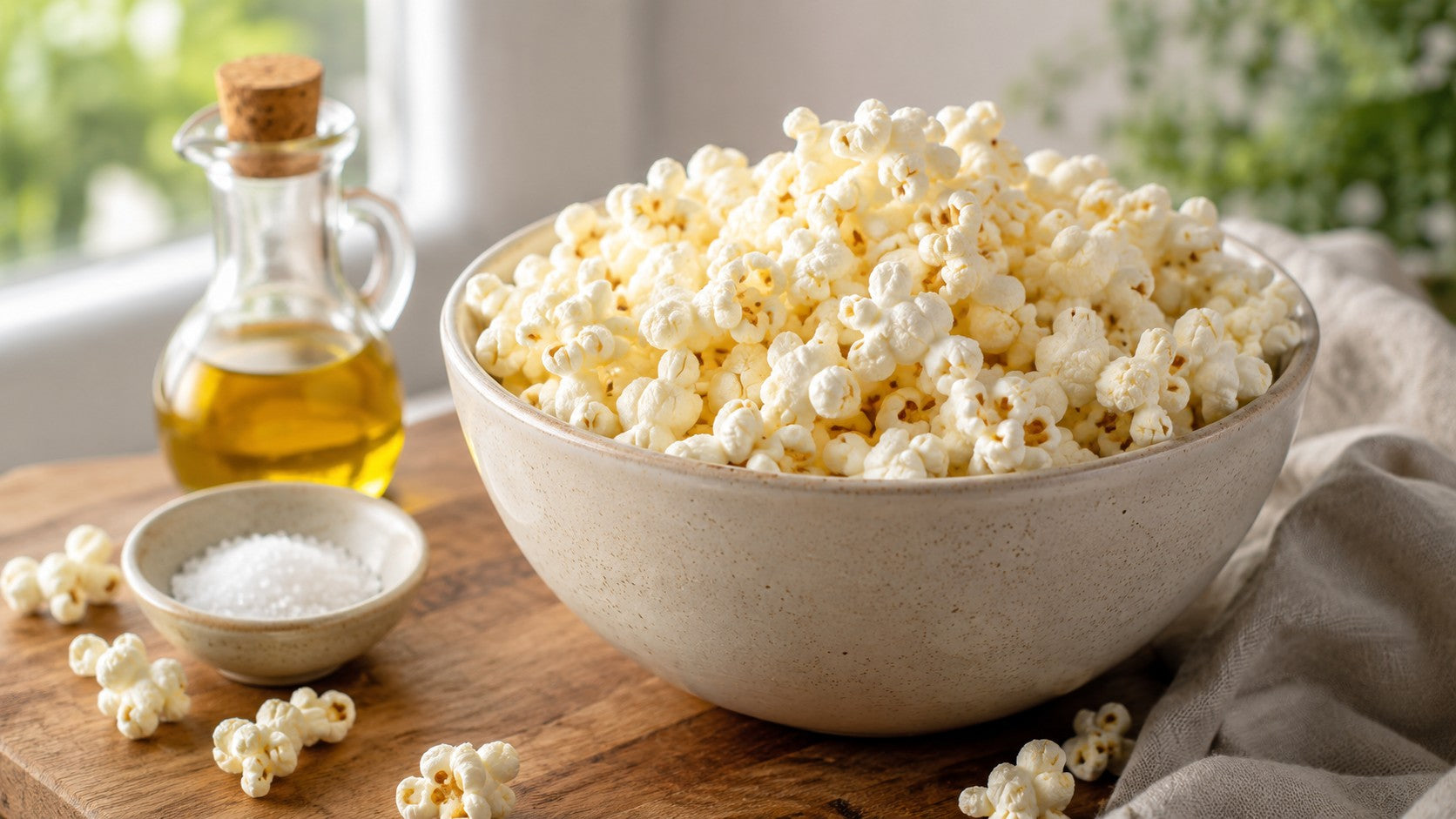
When you open a bag of ready-made microwave popcorn, it's hard to know what goes into the bowl along with the kernels. The question of whether popcorn is healthy doesn't start with the corn itself,...
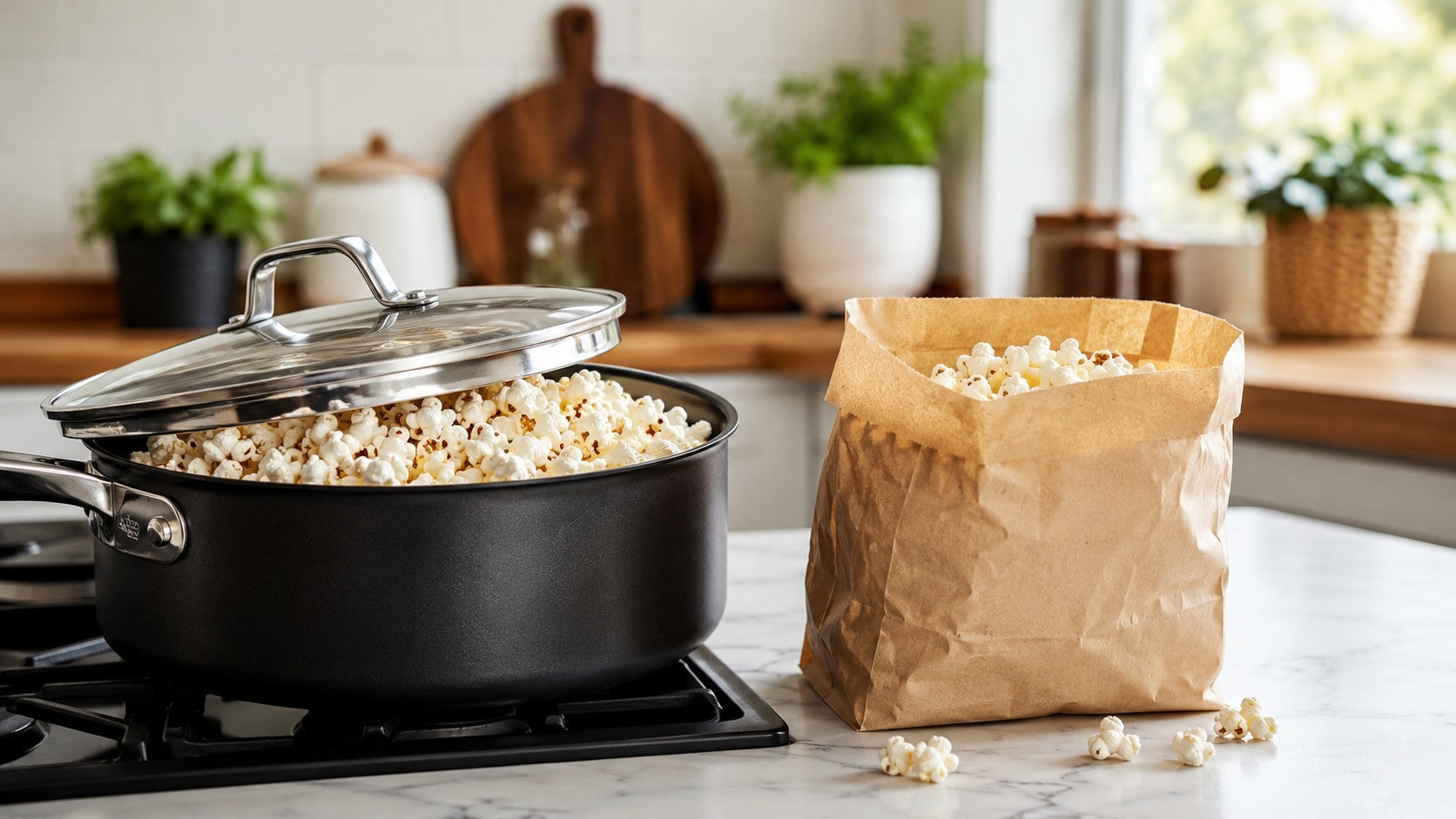
If you've ever found yourself standing in the kitchen in the evening with a bowl of kernels in hand, wondering "what now?", microwave popcorn vs. stovetop popcorn isn't just a matter of taste. It's...