
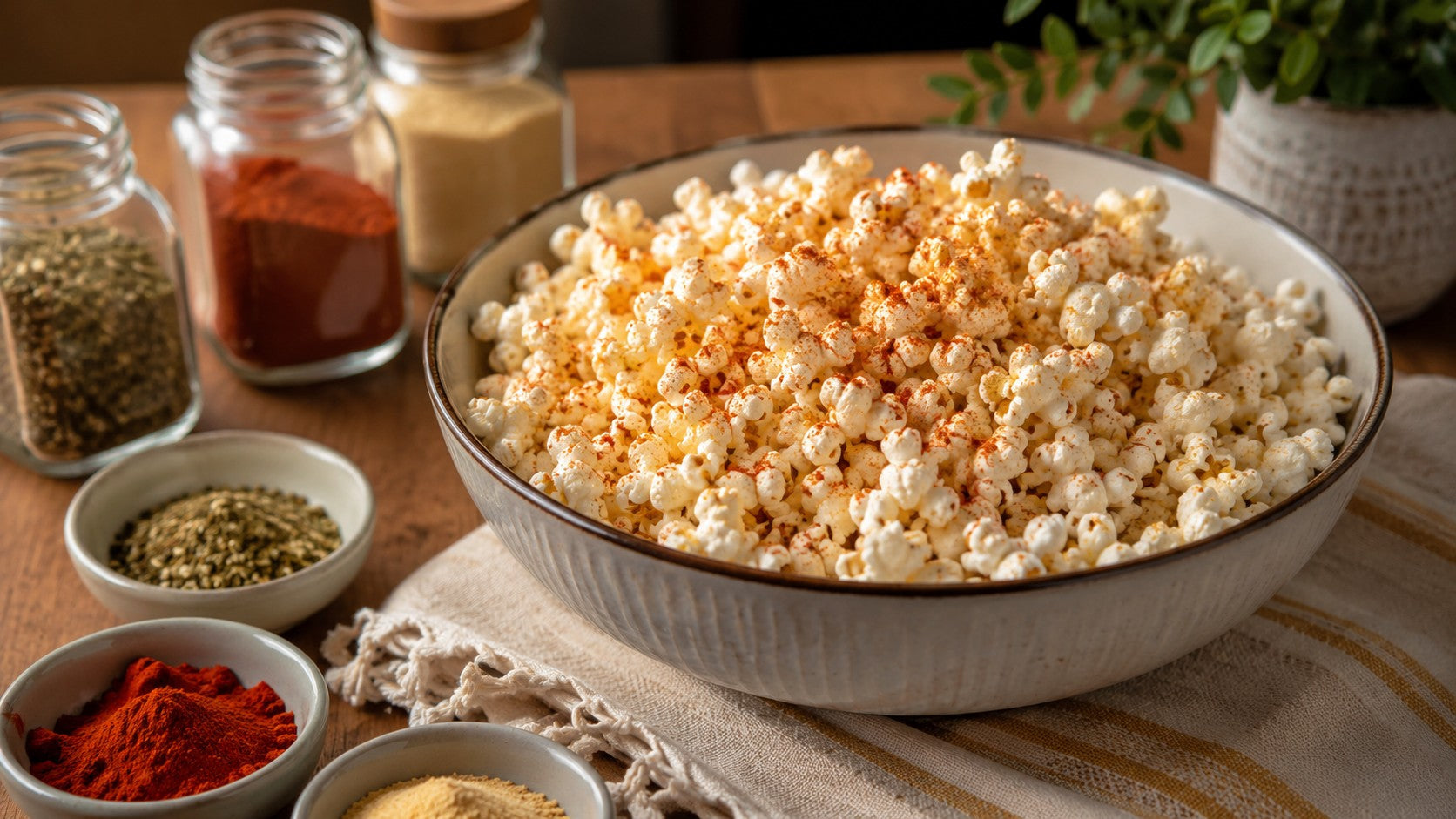
Homemade Popcorn Seasoning: How to Hit the Flavor Bullseye
The popcorn comes out hot, crispy, and just right, and then comes the moment that determines everything: the seasoning. Seasoning homemade popcorn is precisely the difference between a mediocre snack and a bowl that's empty in minutes. The good news is that you don't need mysterious powders or large amounts of oil to achieve excellent flavor. You just need to understand how the seasoning adheres to the popcorn, when to add it, and which combinations work.
Those who make popcorn at home usually seek more control. Less salt, less fat, no unnecessary additives, and no mess from a pot or ingredient-laden bags. But true control doesn't end with the preparation itself. It extends to the taste. With proper seasoning, you can customize popcorn for kids, for entertaining, for movie night, or for a light midday snack, all with simple ingredients you have at home.
What Makes Homemade Popcorn Seasoning Successful
The most common mistake is to think that the seasoning itself is the whole story. In reality, there are three factors that work together: the size of the spice, the amount of moisture, and the timing of its addition. If the spice is too coarse, it will slide to the bottom of the bowl. If too much oil is added, the popcorn loses its crispness. And if you wait too long, the seasoning simply won't stick.
Therefore, successful seasoning begins with texture. Very fine salt will adhere better than coarse salt. Garlic powder will work better than granulated garlic. Finely grated Parmesan will cling better than thick flakes. The same principle applies to sugar, cocoa, and spicy seasonings: the finer they are, the more even the distribution and the more balanced the bite.
Fat also plays a role, but there's no need to overdo it. A small spoonful of delicate olive oil, a little melted butter, or even an oil spray can be enough to help the seasoning stick. The goal is not to drench the popcorn but to give it a thin layer that acts like glue. More than that will make it heavy.
When to Add Seasoning to Homemade Popcorn
The right time is immediately after preparation, while the popcorn is still hot. The heat helps the fat spread easily and the spices adhere. If you wait until the bowl cools, you'll need to add more liquid to get the same result, which will compromise the crispness.
The cleanest method is to transfer the popcorn to a large bowl, add a little fat, toss with a broad motion, and then gradually sprinkle the seasoning. Don't pour everything at once. Sprinkle, toss, taste, and adjust. This is the way to achieve a precise flavor without discovering at the end that the bowl is too salty.
It's easiest to control this stage when starting with a clean base. Acupop's paper bag works without a drop of oil and without additives, so the popcorn that comes out of it is a blank slate: there's no heavy oil layer by default, and no salt already set at the factory.
Classic Flavors That Always Work
There's a reason why salt, butter, and cheese have stayed with us: they simply work. But even within the classics, there's a way to do it better.
Precise Salt, Not Aggressive
In popcorn, excess salt is immediately noticeable. It's better to start with a small amount, mix, and taste. Fine salt or finely ground salt will provide a more even distribution. If you want a deeper flavor without overloading on sodium, you can combine a little garlic or onion powder. They give a sense of richness even when the salt remains moderate.
Butter in the Right Measure
Melted butter adds a comforting, homemade taste, but it should be used sparingly. A few teaspoons for a large bowl are definitely enough. If you want to maintain a lighter flavor, you can combine butter with a little neutral oil, which provides good distribution without being heavy.
Dry and Not Wet Cheese
Fine Parmesan, nutritional yeast, or delicate cheese powder can yield a wonderful result. Wet or coarsely grated cheeses are less suitable; they stick unevenly and can soften the popcorn. If the goal is a pronounced cheesy flavor, it's better to work with dry, finely ground seasoning.
Creative Combinations Without Complicating the Kitchen
You don't need a chef's spice cabinet to create excitement. Many of the best combinations start with two basic ingredients and a small twist.
Spicy-Smoky
Smoked paprika with a pinch of chili creates a deep flavor that's especially suitable for movie night or entertaining. If you want balance, add a little garlic powder. It's a combination that feels rich but remains clean and clear.
Garlic and Herbs
Garlic powder, a little dry oregano, and fine salt create a familiar and beloved direction. Here it's important not to overdo the oregano, as it quickly becomes dominant. Those who prefer a greener, fresher taste can add a little finely ground dry dill.
Sweet-Salty
Cinnamon with a little coconut sugar or fine sugar can turn popcorn into a particularly pleasant evening snack. For this to work, you need a very delicate layer of fat or spray. Without it, the sugar will simply fall to the bottom. A small pinch of salt complements the sweetness and enhances it.
Cocoa for a Deeper Version
If you want a less expected sweet direction, you can mix cocoa with a little powdered sugar and a pinch of salt. The result is not very sweet, but rather more sophisticated and interesting. This is a good solution for those looking for a dessert flavor without feeling heavy.
How to Adjust Seasoning for Who's Eating
One of the great advantages of homemade popcorn is that you don't have to make one bowl for everyone. Children will usually prefer simpler flavors: mild salt, a little butter, perhaps cinnamon and sugar. Many adults, however, will enjoy a deeper seasoning like smoked paprika, garlic, or a slight spiciness.
The time of day also matters. If it's a light midday snack, a mild, unheavy seasoning is preferable. If it's for entertaining, you can go for more prominent flavors. And if it's popcorn you make repeatedly throughout the week, it's worth developing three or four regular combinations that everyone in the house knows and loves. This saves indecision and maintains variety effortlessly.
Mistakes That Ruin the Result
Many disappointments with seasoned popcorn stem from small things. The first is using too much oil. This may sound like an easy solution for sticking seasonings, but in practice, it produces heavy and soft popcorn. It's better to start with a little and add only if necessary.
The second mistake is overly coarse seasoning. Coarse salt, coarsely ground black pepper, or long herbs simply don't adhere well. If you want a strong flavor, you don't have to add more; you just need to grind it finer.
The third is lack of mixing. Scattering spices only on the surface creates a strong layer on top and a bland bowl underneath. Gentle mixing between layers, once or twice during seasoning, solves this immediately.
And the fourth mistake is chasing "more." More spicy, more salty, more sweet. In popcorn, balance actually wins. The kernel itself is delicate, and every addition is quickly felt. It's better to build flavor gradually than to try to fix a bowl that's already too extreme.
Homemade Popcorn Seasoning When It's Important to Eat Cleaner
When you make popcorn from kernels alone, you get a simple and clean starting point. From here, you can choose whether you want just salt, whether to add a little good oil, or whether to go for a more elaborate combination. This is flexibility that is hard to find in pre-made products, and it's especially significant for those trying to reduce sodium, control fat intake, or avoid excessively long ingredient lists.
This is also why homemade popcorn can suit several lifestyles simultaneously. For a family that wants a quick snack after school, for a student looking for something light while watching a series, and for someone entertaining who wants to put something simple but characterful on the table. When the base is clean, every seasoning feels like a choice and not a compromise.
A Simple Method to Find Your Seasoning
If you haven't found your go-to flavor yet, there's no need to guess. Start with a basic bowl and season in sections. One-third with salt and butter, one-third with paprika and garlic, and one-third with cinnamon. Taste, compare, and understand what works in your home.
After two or three times, you'll see a pattern. Some people like a strong, dry flavor, some prefer something softer and rounder, and some like to vary it each time. That's precisely the beauty of homemade popcorn seasoning: you don't have to commit to one flavor, but you can build a method that repeats itself and succeeds every time.
The Clean Base from Which All Good Seasoning Begins
Acupop is an Israeli brand that produces paper bags for making popcorn in the microwave. You pour your kernels into the bag, close it with the unique fastener, and microwave for 2-3 minutes. No oil, no salt, and no pre-determined flavorings. What comes out is completely neutral popcorn, and from there, the seasoning is all yours.
The bag is made of paper only, without plastic coating and without PFAS, and you don't need a pot, supervision, or dishes to wash. You can make a bowl, divide it into three, and try three different seasonings on the same evening.
- Completely neutral base, without oil and without pre-salt
- Can make several small portions and season each differently
- Paper only, without plastic coating and without PFAS
- 2-3 minutes from start to bowl, no dishes
You can order the Acupop bag pack for natural homemade popcorn and upgrade with mushroom variety corn kernels, which pop large, round, and crispy and hold seasoning much better.
In the end, good popcorn doesn't need much. A clean base, a light hand with seasoning, and a little attention to what tastes good to you. Order an Acupop bag pack and the path to the next bowl is very short.
Read more

There are moments at home when the kids are already hungry, you want something quick, but you really don't feel like opening another processed snack. This is precisely where the question arises of ...
There's that moment when you make a bowl of popcorn at home, take one bite, and realize you were a bit heavy-handed with the salt. It happens quickly, especially when trying to compensate for homem...