
How to choose a snack for children at home without compromising
After kindergarten, between lessons, or just before heading out to an after-school activity, children's hunger doesn't wait for a proper meal. This is exactly where the question arises: how to choose a snack for children at home without automatically resorting to something processed, too salty, or something that leaves them feeling heavy afterward. The best choice usually doesn't start with colorful packaging, but with what's inside and how much control you have over it.
Parents aren't just looking for something their children will agree to eat. They're looking for a solution that works in real life: fast, convenient, not messy, something that doesn't require a kitchen project, but also doesn't bring in another list of unnecessary ingredients. A good snack isn't one that looks "healthy" on the shelf, but one that successfully combines simplicity, taste, and ingredients you understand.
How to choose a snack for children at home based on what matters
The first rule is simple: it's better to choose a snack with few ingredients and many benefits. The more control you have over the raw materials, the easier it is to know what your children are eating. This doesn't mean every snack has to be perfect, but it's worth prioritizing those that are immediately understandable: grain, fruit, yogurt, seeds, legumes, or a homemade snack that starts with something basic rather than a complex industrial mix.
The second thing is balance. A good snack doesn't have to be just sweet to be accepted, and it doesn't have to be dry and uninteresting to feel "right." Children respond very well to texture, smell, and experience. Therefore, sometimes the smart choice is one that offers crunchiness, warmth, or the possibility of gentle seasoning, without overloading on oil, salt, or additives.
And the third thing is real convenience. If a healthy snack requires half an hour of preparation, peeling, soaking, and the patience of a Saturday morning, it simply won't happen in most homes. The right solution is one that keeps pace with the household: a few minutes, few utensils, minimal mess, and a result that children want to have more of.
What to check before bringing a snack home
When looking at snacks for children, it's worth asking four simple questions. The first is how processed it is. Not all processing is a problem, but there's a big difference between food that has undergone basic preparation and a product built from a long list of ingredients with flavorings, stabilizers, and additives that add no value.
The second question is how much control you have over it. Can you determine the amount of salt? Choose whether to add fat at all? Adjust the taste for one child who likes it mild and another who prefers it slightly sweet? Control is a big advantage, especially in a household with several children and different preferences.
The third question is how it feels after eating. A good snack shouldn't give an energy boost and then a crash. It should satisfy hunger, not create a burden. That's why often a simple, filling, and light solution is preferable to heavy or very sweet snacks that lead to a request for "something else" after ten minutes.
And the fourth question relates to what's left behind, not just on the plate, but also in the kitchen and the trash. If every snack creates a mess, a strong smell, or a lot of waste, it's less suitable for a routine. This might sound minor, but in an active household, it's part of the purchasing decision just like taste.
A good snack for children doesn't have to look like dessert
One common mistake is thinking that a snack for children has to be sweet or "indulgent" to be successful. In practice, children quickly get used to what is consistently available to them. If the home offers simple, tasty, and enjoyable eating options, they become natural. Not because you forced them, but because that's what's there, and it's delicious.
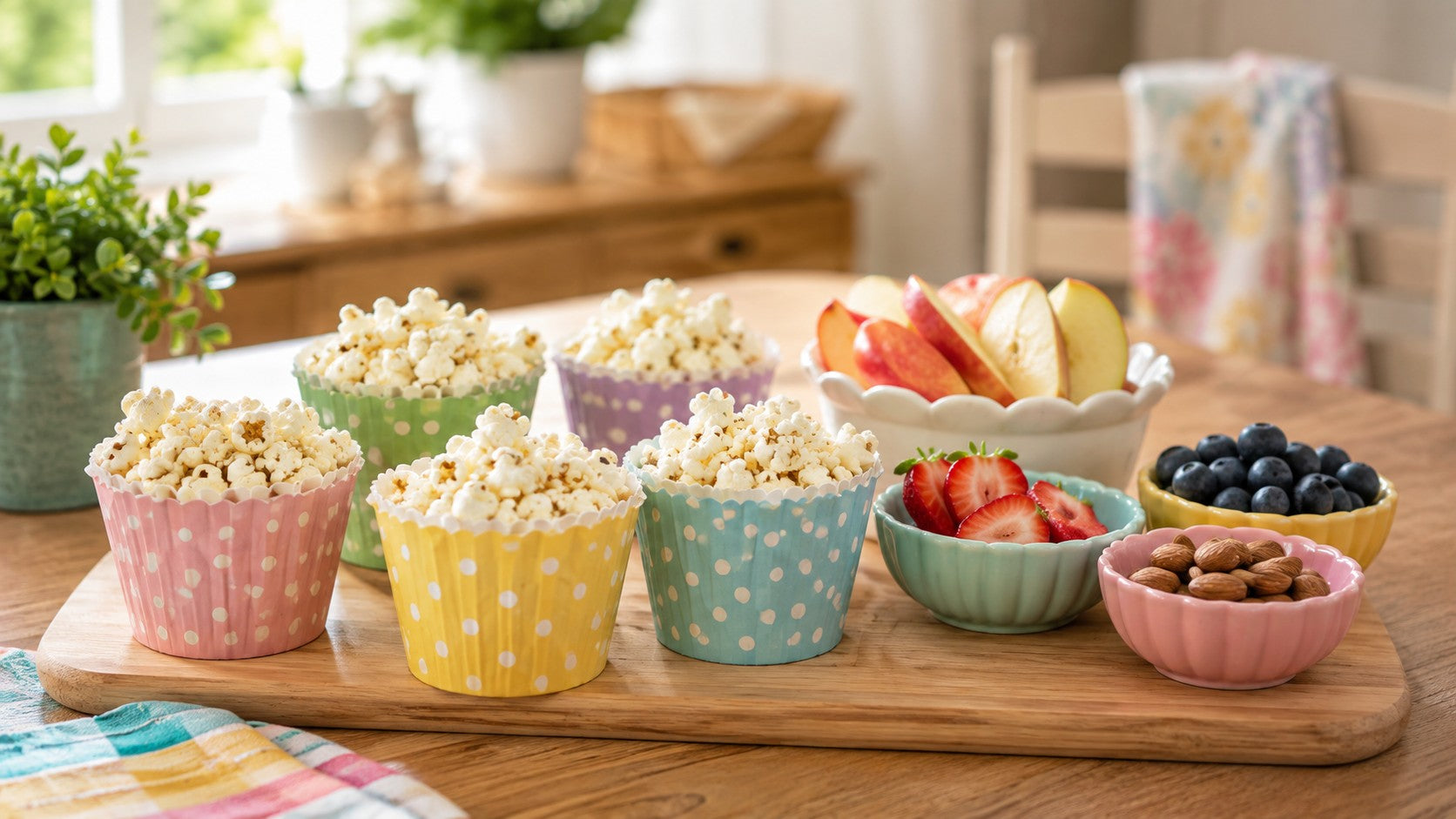
Cut fruits, crunchy vegetables, natural yogurt with a small addition, a homemade muffin with simple ingredients, or homemade popcorn from kernels: all of these can work great. The difference is not only in nutritional value but in the overall feeling: less burden, more clean taste, and more room for customization.
Popcorn is an especially good example because it sits precisely at the intersection parents are looking for: quick to prepare, crunchy, fun, and can be very simple in its composition. When it starts with kernels only, without unnecessary additions, you can decide whether to add a pinch of salt, a little olive oil, or leave it natural. This changes the whole story: from a ready-made snack with someone else's decisions, to a snack you control.
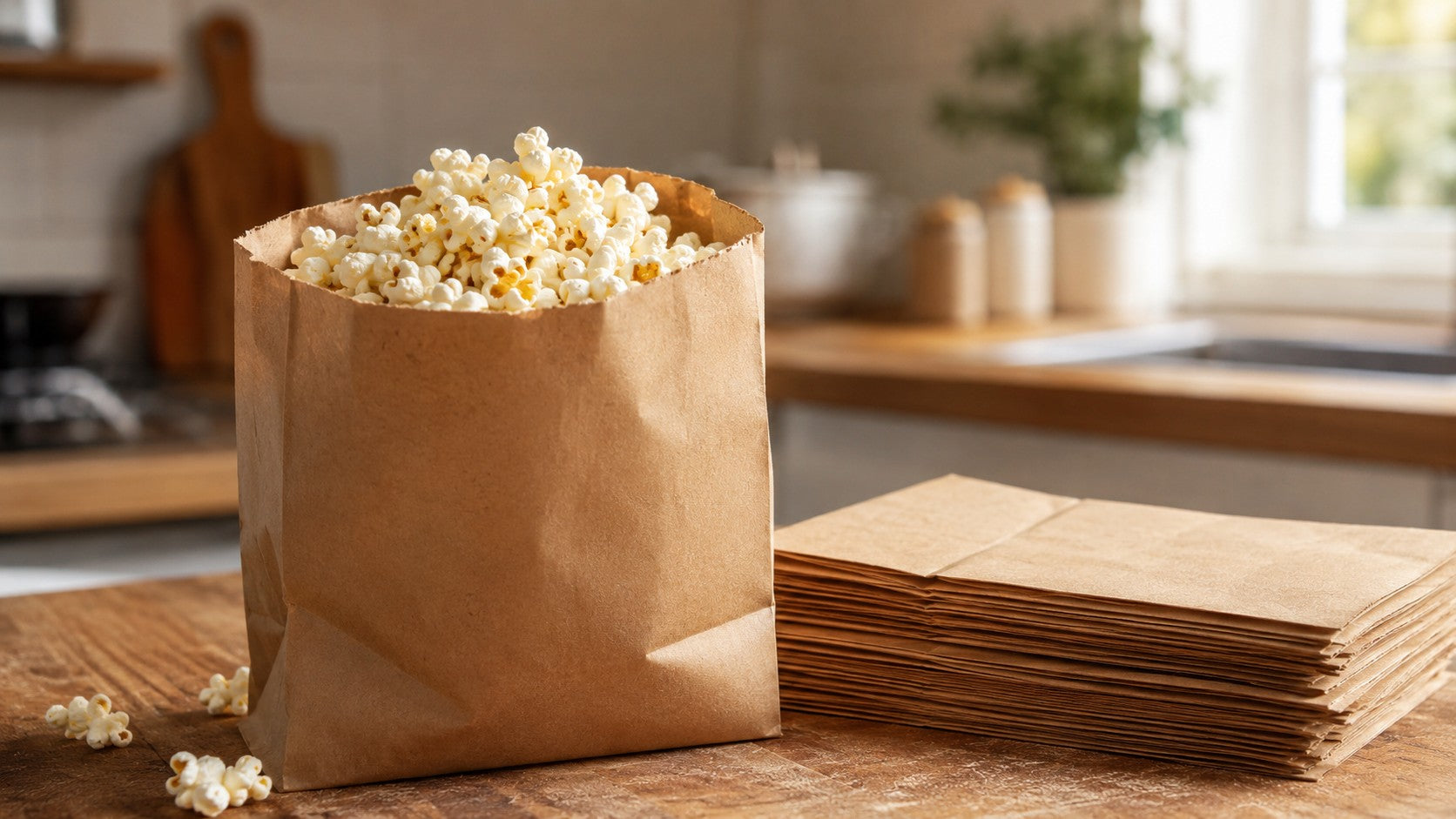
For this moment, we at Ecopop have created the ecological paper bag for microwave popcorn: you put in kernels, close it, 2-3 minutes, and you have a bowl of hot popcorn that you season exactly as your children like. No oil, no plastic coating, and no pot to wash.
How to choose a snack for children at home according to age and situation
Not every snack is suitable for every moment. A small child returning from childcare tired and hungry will benefit from something accessible, soft, or easy to chew, while an older child who wants "something to watch a movie with" will look for crunchiness, quantity, and a feeling of indulgence. The right choice is one that suits both the child and the moment.
Before dinner, it's better to have a small snack that won't completely spoil their appetite. On a busy day, you can choose something a bit more filling. When hosting friends, consider presentation and ease of sharing. And on days when you don't have a spare minute, simplicity wins: something that's ready quickly and doesn't leave the kitchen looking like a disaster zone.
Taste is also a matter of context. Some children like routine and don't want surprises, while others enjoy choosing new seasonings. Once the base is simple and clean, you can play around. This is exactly the point where a snack transforms from a daily chore into part of the home experience.
When children want to choose for themselves
It's good to allow children some degree of choice, but within a clear framework. Instead of asking "what do you want?", it's better to offer two or three options that you are already comfortable with. This way, they feel independent, and you still control the quality.
You can also involve them in the preparation. Children who enjoy pouring, shaking, choosing a bowl, or deciding on seasoning tend to connect more with what is served to them. This is especially true for quick-to-prepare snacks, where the result is seen immediately. Pour, prepare, eat, without drama and without a long wait.
What works less well, even if it seems convenient
Some snacks seem like an easy solution, but in practice create more problems than benefits. Those with a very strong taste that accustoms the palate to overload, those that leave a greasy feeling, or those that come with a list of ingredients too long for a product that should be simple. They may be convenient at first glance, but they are less suitable for a home that seeks a cleaner routine.
Even "children's" snacks that are nicely branded don't always live up to the promise. Sometimes the packaging does the job, but the content remains too sweet, too salty, or too processed. Therefore, it's worth looking less at the claim and more at the composition, the preparation method, and the simple question: would I prepare something similar myself at home?
This doesn't mean every snack needs to become a tough health project. On the contrary. The goal is to find the smart middle ground: one that feels fun for the children, but still sits well with parents, both nutritionally and operationally.
The snack children ask for and parents are happy to make
Homemade popcorn is one of the few snacks everyone at home agrees on, and at Ecopop, we've made it a three-minute affair. The bag is made of paper without plastic coating and without PFAS, with a unique seal that closes easily, so even an older child can prepare it themselves with light supervision.
You choose the kernels, the amount of salt, and the seasoning, and there's no spilled oil, no pot on the stove, and no pile of dishes at the end.
- Ready in 2 to 3 minutes in the microwave, just in time for a hungry child
- No oil, no plastic coating, and no PFAS
- Full control over salt and seasoning, for each child according to their taste
- Zero dishes to wash, one bowl and that's it
You can start with an Ecopop natural homemade popcorn bag pack, and add mushroom variety corn kernels that pop large, round, and crunchy, just as children like them.
The smart choice is the one you can stick with
A good snack for the home isn't a nice idea for two days. It needs to be something you'll use again and again. Therefore, it's better to choose solutions that fit your routine, not just your aspirations. If you need something quick after school, go for what fits the timing. If it's important to you to reduce additives, look for a simple base. If you want less waste and less mess, factor that into the decision.
This is precisely where simple solutions make a difference. Homemade popcorn prepared in the microwave without a pot, without mess, and without heavily processed industrial packaging, gives parents a rare combination of speed, control, and experience.
Ultimately, how to choose a snack for children at home isn't just a question of health. It's a question of habits, convenience, and the atmosphere you want to create in the kitchen. When you choose simple, clean, and tasty, it's much easier to turn even a daily snack into something that feels right, and you can start today with an Ecopop bag pack.
Read more
When searching for a review of uncoated popcorn bags, you're usually not just looking for a bag. You're looking for a way to make a quick snack without compromising on what goes into it, without a ...
Between after-school activities, homework, and the hunger that strikes precisely when there's no time, a healthy snack for the family quickly becomes a daily challenge. On the one hand, you want so...